

“Proven Performance, Every Time.”
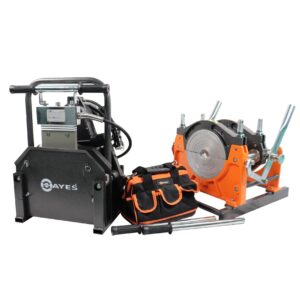
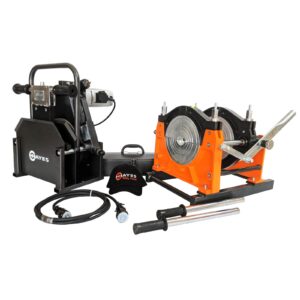
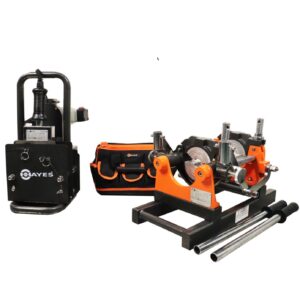
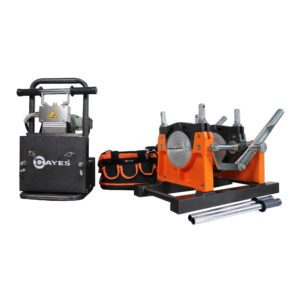
This is a tough-built, solidly constructed manual butt fusion machine for commercial-grade use, engineered to outlast time. It’s ready to work and fuse plastic pipe from 1” to 4” with reliable performance you can trust. Every unit is in stock and ships straight to your jobsite — no waiting around. We provide spare parts, technicians, and a U.S. support team ready to back you up, making Hayes a brand trusted by crews everywhere.
Pipe Fusion Equipment
Manual butt fusion machine for Thermoplastic Pipe Installations

|

|

|
Quick Datasheet
Working Range: 1″-4″ | Voltage: 110 V 50/60 Hz
Power: 1700 watts | Working temperature: 0-518 °F
Display: Fahrenheit | Machine weight: 119 lbs.
Shipping info: 119 lbs. (38” x 17” x 27”)
Delivery: Ships in 2 business days. | Item location: SC, USA
“If you follow the operation procedures and maintenance carefully and correctly, your Manual Butt Fusion Machine Pipe Welding COMBAT PROX Series Butt Fusion Machines will provide many years of service.”
- The HAYES® COMBAT PROX series is suitable for butt fusion pipes and fittings such as HDPE and any other kind of thermoplastic pipes from 2” to 4”.
- This machine is rugged, reliable and manually-operated it is alo designed to make the fusion process easier when welding small diameter pipes because it requires only one operator and minimal maintenance.
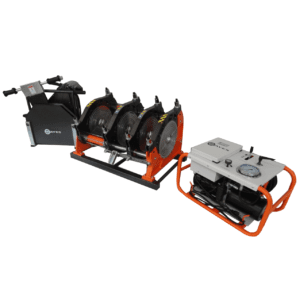
- Machine consists of pipe alignment carriage, insert sets, Teflon-coated heating plate, electric trimmer and electric stand.
- The portable manually operated alignment will simplify the job on site. The compact electric trimmer and the heater work with 110V and they only need 1000 watts of power each. It will save you time and money while fusing pipe consistently with high-quality results.
- Designed and manufactured according to the American international standard (Inches) ASTM F2620.
- Additional DIPS and Metric pipe inserts are available and sold separately
Parts of Manual butt fusion machine pipe welding
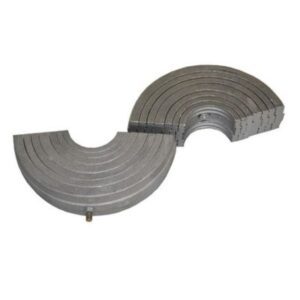
| Teflon-coated heating plate
Teflon-Coated heater that reduce polymer adhesion. The heater temperature is controlled by a microprocessor installed in the electric control unit support. Included! |
Electric Trimmer/Facer
A trimmer or facer is a rotating cutting device that square-off the pipe or fitting ends to obtain properly mating fusion surfaces. Included! |
|
| Pipe alignment carriage
This pipe alignment carriage has a stationary and a movable clamping fixture for aligning and holding each of the two parts of the pipe to assist with pipe welding process. It also includes all the appropriate inserts for clamping different pipe sizes or fitting shapes. Included! Inserts/Clamps
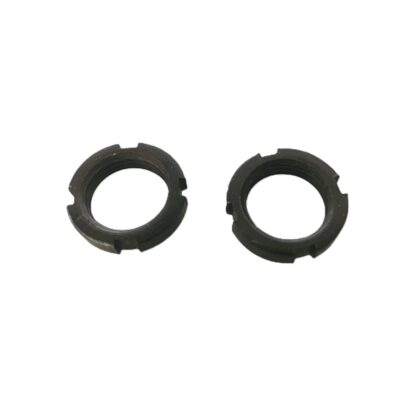
The clamps or inserts need to be installed for the pipe that is being fused. This machine included IPS inserts: 1”, 1-1/4”, 1-1/2”, 2”, 2 1/2”, 3” + 4” IPS master insert built in the machine. Included! |
Electric control unit / support
The power unit support controls the electric system and temperature display for more accurate and stable connection. It is also a stand for the heater and trimmer. Included! |
|
 Gauge torque wrench: We recommend to use a torque wrench with special adapter for precise force. Gauge torque wrench: We recommend to use a torque wrench with special adapter for precise force. |


Introduction about Manual Butt Fusion Machines
Pipe welding Industry Application
A Manual Butt Fusion Machine welds thermoplastic pipes and fittings made of HDPE (Polyethylene), PPR (Polypropylene), PB (Polybutene), and PVDF using heat fusion and manually controlled force. This method plays a crucial role in joining pipes and fittings, ensuring leak-proof connections and long-lasting joints while maintaining the integrity of fluid transportation networks.
What is Butt Fusion?
Butt fusion uses thermal welding to join thermoplastic pipe ends and fittings. As heat and pressure melt and mix the molecules of the two pipes, the joint forms. As the joint cools, the plastic molecules gradually return to their original structure, and consequently, the two parts fuse into a single monolithic pipe, thereby creating a seamless end-to-end connection.
When to Use Butt Fusion: We can use Butt fusion in various industries and applications, including:
- Water and Gas Distribution: It provides leak-free connections that are critical for the safe and efficient transport of these essential utilities.
- Wastewater Management: In sewage and wastewater systems, where pipes are subjected to a variety of harsh chemicals and environmental conditions, butt fusion is the go-to method for reliable, long-lasting connections.
- Industrial Pipelines: Industries such as chemical processing, mining, and agriculture often rely on butt fusion to join pipes that transport a wide range of materials, from corrosive chemicals to irrigation water.
- Geothermal and HVAC Systems: Butt fusion connect pipes in geothermal heating and cooling systems, ensuring efficient heat transfer and long-term durability.
Benefits of Butt Fusion
Butt fusion offers several advantages that make it a preferred choice for many applications:
- Leak-Proof Joints: The resulting joints are seamless and completely leak-proof, ensuring the integrity of the fluid or gas being transported.
- Longevity: Butt fusion joints are highly durable and can withstand the test of time, making them ideal for applications where longevity is crucial.
- No Need for Solvents or Adhesives: Unlike other joining methods, butt fusion does not require the use of solvents or adhesives, reducing the risk of chemical contamination.
- Low Maintenance: A butt fusion joint requires minimal maintenance, reducing operational costs.
- Consistency: Butt fusion offers a high degree of repeatability and consistency in joint quality.
Butt fusion Procedure
The butt-fusion procedure heats the ends of two pipes, a pipe and a fitting, or two fittings by pressing them against a heated plate. After achieving the proper melt, the operator removes the heater plate, promptly brings the ends together, and allows the joint to cool while maintaining the correct force or pressure.
An appropriately sized butt fusion machine clamps, aligns, and faces the pipe or fitting ends and applies the specified fusion force or pressure.